Afternoon Light
Welcome to the Afternoon Light Podcast, a captivating journey into the heart of Australia’s political history and enduring values. Presented by the Robert Menzies Institute, a prime ministerial library and museum, this podcast illuminates the remarkable legacy of Sir Robert Menzies, Australia’s longest-serving prime minister. Dive into the rich tapestry of Menzies’s contemporary impact as we explore his profound contributions on the Afternoon Light Podcast. Join us as we delve into his unyielding commitment to equality, boundless opportunity, and unwavering entrepreneurial spirit. Our engaging discussions bring to life the relevance of Menzies’s values in today’s world, inspiring us to uphold his principles for a brighter future. Ready to embark on this enlightening journey? Experience the Afternoon Light Podcast now! Tune in to explore the past, engage with the present, and shape a better tomorrow by learning from the visionary leadership of Sir Robert Menzies. Stay connected by signing up on the Robert Menzies Institute website: https://www.robertmenziesinstitute.org.au/. Have an opinion? Email your comments to: info@robertmenziesinstitute.org.au.
Listen on:










Episodes
Wednesday Aug 31, 2022
Wednesday Aug 31, 2022
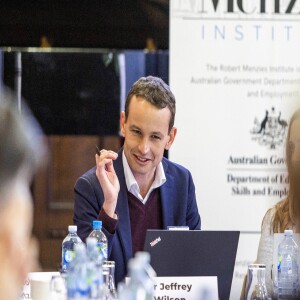
It is no secret that Australia currently faces a troubled geopolitical environment, indeed one of the most difficult that we have faced in recent memory. In these novel circumstances it is worthwhile looking back on past periods of disturbance to draw lessons for the present. While people tend to be quick to jump to comparisons to the 1930s and its catastrophic descent towards global conflict, there are significant and perhaps more profitable parallels to be drawn between the 1950s and now, particularly when it comes to a shake-up in global trade and the international economic order.In this week’s episode of the Afternoon Light podcast, Robert Menzies Institute CEO Georgina Downer talks to Jeff Wilson from the Australian Industry Group about how the Menzies era can help us not just to safely navigate the present but to seize its important opportunities.
Wednesday Aug 24, 2022
Wednesday Aug 24, 2022
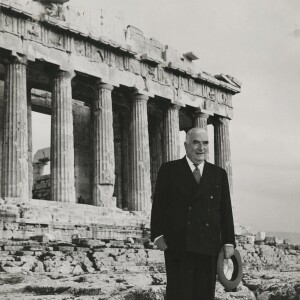
In the ‘Forgotten People’ broadcast Menzies presaged JFK by suggesting that ‘The great question is, "How can I qualify my son to help society?" Not, as we have so frequently thought, "How can I qualify society to help my son?"’. Following this, a close examination of Menzies’s political speeches demonstrates that he talked about the individual’s duties and obligations almost as much as he talked about their freedom and their liberty. In this vein, Menzies fitted into a long tradition of civic republicanism which stretched back to Ancient Rome and included such figures as Oliver Cromwell. These republicans were concerned about tyranny and domination, but they equally saw the individual as inseparable from and having deep responsibilities to the community.
Wednesday Aug 17, 2022
Wednesday Aug 17, 2022
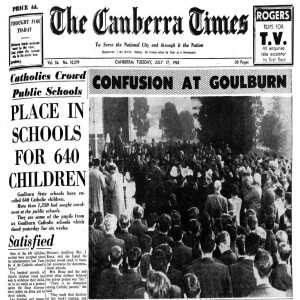
The issue of State Aid for independent schools was once one of the most divisive in Australian politics. When the advent of ‘free, compulsory, and secular’ education in the 19th century spelled the end of government support for denominational schools, Australia’s Catholic community resolved to maintain their own schools as a matter of identity, culture, and pride. Meanwhile, informed in part by sectarianism and prejudice, the Protestant majority became equally determined that no government money should go into assisting these schools, leaving what was a relatively impoverished section of Australian society to fend for themselves all while paying taxes for the public system. It was Robert Menzies, a Presbyterian with a fierce distaste for religious bigotry, who cut through this gordian knot of education policy and in doing so helped to bring the nation together.
Wednesday Aug 10, 2022
Wednesday Aug 10, 2022
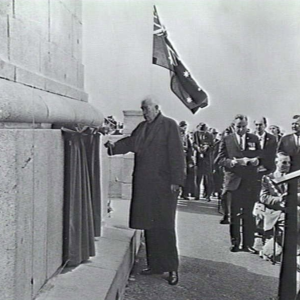
The idea of an ‘Australian citizen’ is a concept that is in a perpetual state of development. At the time of federation, Australians considered themselves to be British subjects and the only time ‘citizenship’ is mentioned in our Constitution is to bar citizens of a foreign power from siting in Parliament. Without a clear definition, the concept has gradually evolved through discourse and through practice, and a central figure in that evolution was Robert Menzies. For Menzies, citizenship was an organic idea, wrapped up in the acceptance of duty and the moral independence of the individual, which allowed them to freely and informedly exercise their vote come election time. It was also tied to the prospect of home ownership, which Menzies did so much to expand, and a nation of people who had a stake in their country and in its future.
Wednesday Aug 03, 2022
Wednesday Aug 03, 2022
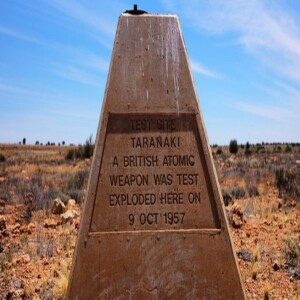
While Australia’s hosting of British nuclear tests in the 1950s is a well-known and controversial policy of the Menzies Government, the fact that Australia sought its own ‘bomb’ remains relatively obscure. That our nation’s leaders, on both sides of politics, desired nuclear weapons should not surprise us. Australia had stared down the existential threat of invasion during World War Two, and on the same premise that informed ‘populate or perish’ and our push for an ongoing alliance with the United States, governments were willing to do whatever it took to safeguard national security. As new security fears and the challenges of climate change are breathing new life into the debate over a potential nuclear future, it is the perfect time to shine a light on Australia's nuclear past.
Wednesday Jul 27, 2022
Wednesday Jul 27, 2022
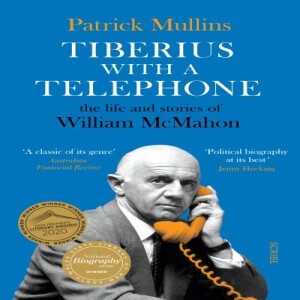
Often described as one of Australia’s weakest Prime Ministers, Billy McMahon nevertheless makes for a fascinating biographical subject. A notorious leaker who made far more enemies than friends, McMahon’s climb to the top position of Australian political leadership is one of the most surprising and remarkable achievements in Australian politics. For all of his flaws, McMahon was a man of great perseverance, work-ethic, and drive, and on a number of policy positions, particularly that of free trade, he was actually more perceptive and forward thinking than his colleagues. While McMahon is best remembered for losing 1972 election, even that epoch defining result was a far closer fight than the popular memory would allow.

Thursday Jul 21, 2022
Thursday Jul 21, 2022
At the heart of Robert Menzies’s appeal to the ‘Forgotten People’ was the family, the essential basis of a healthy society. Menzies described the instinct to be with one’s family as ‘the great instinct of civilised man’. This was no mere rhetoric, Menzies was at heart a family man and cherished every moment that he got to spend with his close relatives. They in turn remember him fondly, and can provide insights into the real man that would otherwise remain forever hidden.
Wednesday Jul 13, 2022
Wednesday Jul 13, 2022
In this week’s episode of the Afternoon Light podcast, Robert Menzies Institute CEO Georgina Downer talks to Tom Frame about Menzies’s Liberal deputy and immediate successor Harold Holt.
Wednesday Jun 29, 2022
Wednesday Jun 29, 2022
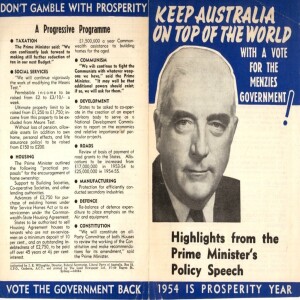
In this week’s episode of the Afternoon Light podcast, Robert Menzies Institute CEO Georgina Downer talks to Western Sydney University Lecturer Dr Bridget Brooklyn about the intricacies of the pivotal 1954 election.
Wednesday Jun 22, 2022
Wednesday Jun 22, 2022
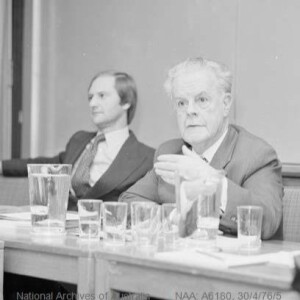
In this week’s episode of the Afternoon Light podcast, Robert Menzies Institute CEO Georgina Downer talks to Peter Drysdale AO, architect of the Asia-Pacific Economic Cooperation Forum, about his personal reflections on how the Australia-Japan relationship has developed over the years.